

A New Dementia Risk Factor May Be Hiding in Your Grocery Cart
A new Australian study involving more than 2,100 middle-aged and older adults found that higher consumption of ultra-processed foods was associated with poorer attention and a higher modifiable risk of dementia. Importantly, these associations remained significant even after accounting for adherence to a Mediterranean-style diet, suggesting that the degree of food processing itself may influence brain health.
Ultra-Processed Foods May Harm Brain Health Even in People Who Eat Otherwise Healthy Diets
Ultra-processed foods have become a major component of modern diets, accounting for a substantial proportion of daily calorie intake in many countries. While previous research has linked these foods to obesity, cardiovascular disease, and type 2 diabetes, growing evidence suggests they may also affect cognitive health.
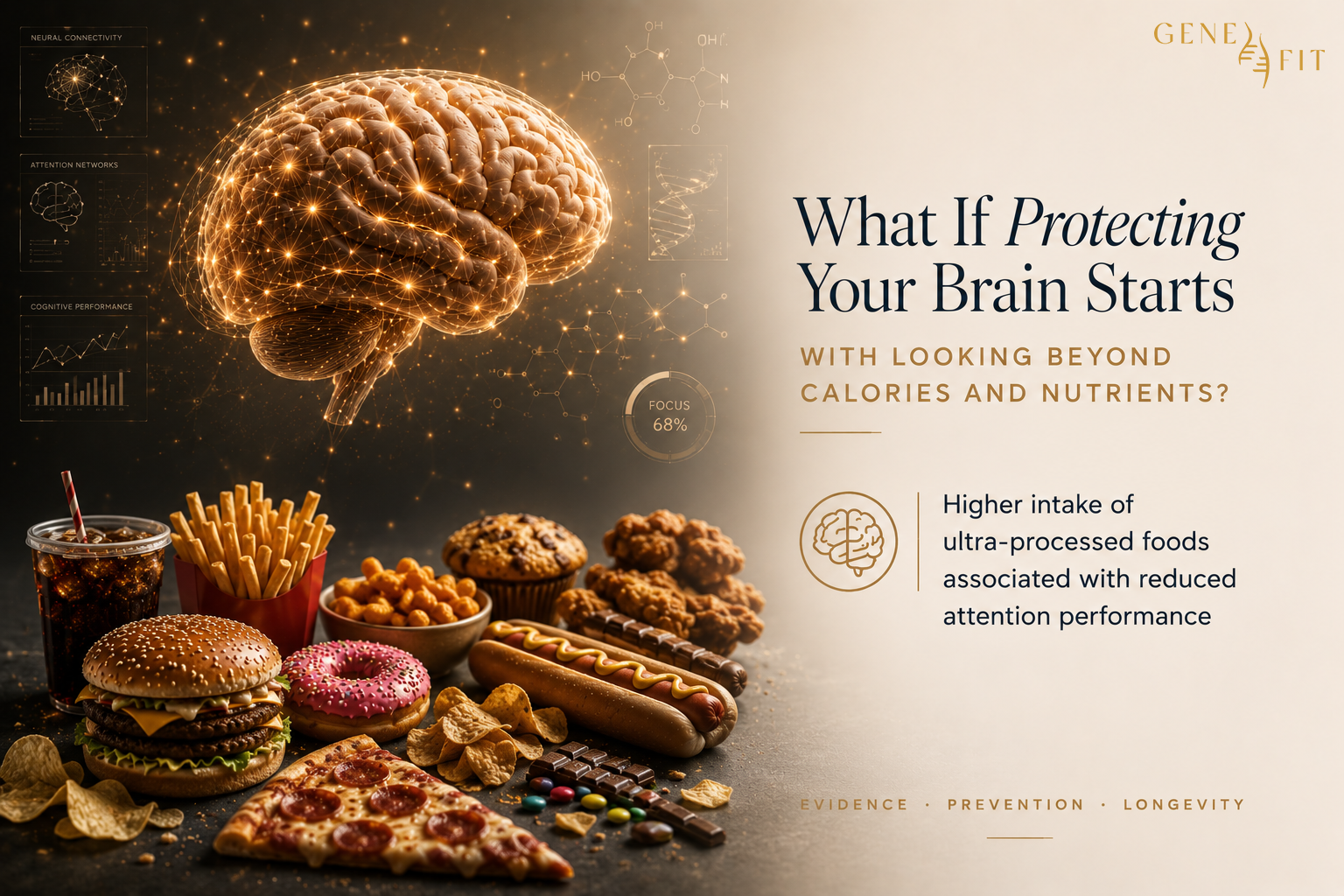
A new study published in Alzheimer's & Dementia: Diagnosis, Assessment & Disease Monitoring investigated whether ultra-processed food consumption is associated with cognitive performance and dementia risk among Australian adults aged 40 to 70 years.
Researchers analyzed data from 2,192 dementia-free participants enrolled in the Healthy Brain Project. Dietary habits were assessed using a validated food-frequency questionnaire, while cognitive function was measured using the Cogstate Brief Battery. Dementia risk was estimated using the CAIDE risk score, a widely used tool that incorporates several modifiable risk factors.
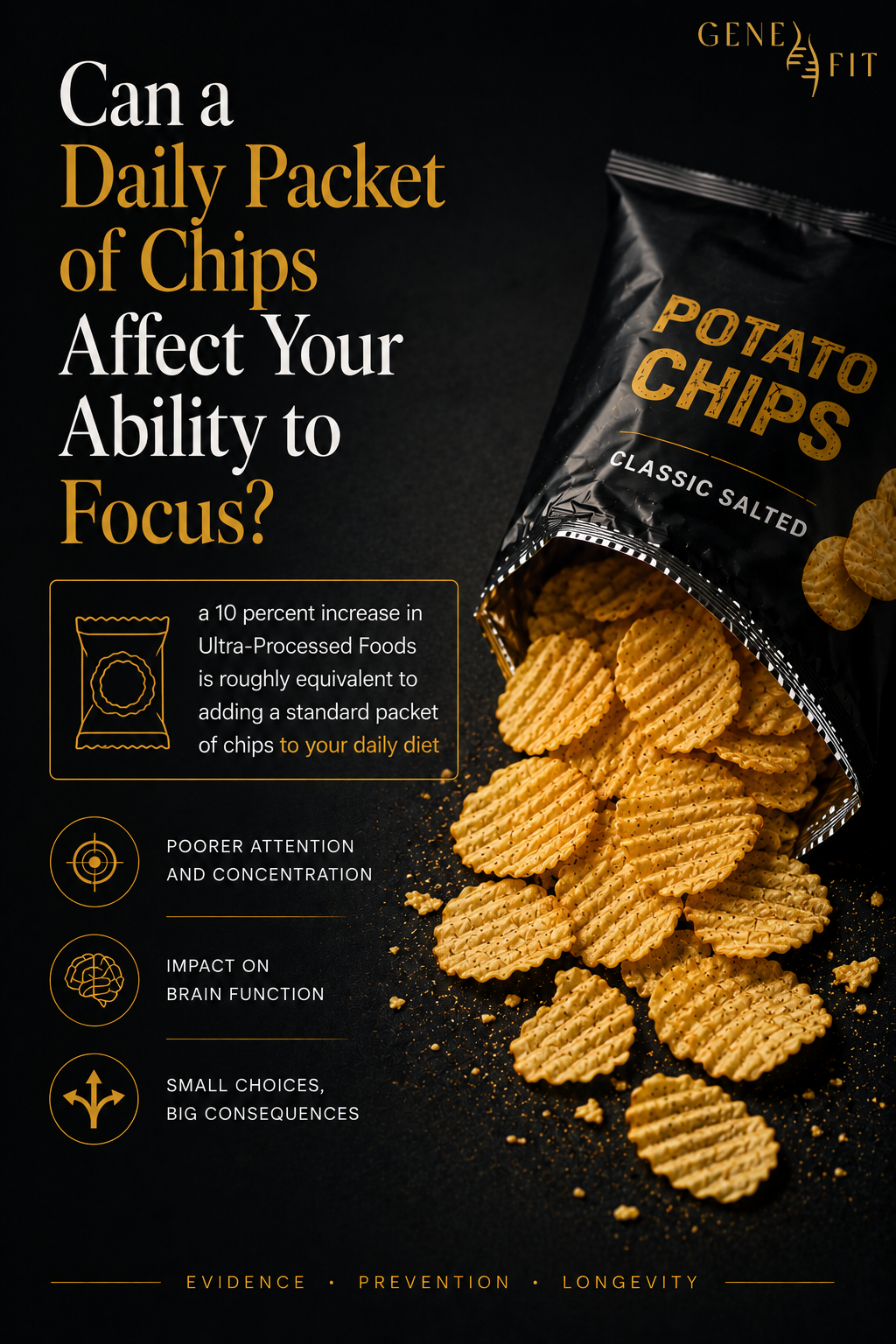
The findings revealed a clear association between higher ultra-processed food intake and poorer attention performance. For every 10% increase in the proportion of ultra-processed foods in the diet, participants experienced a measurable decline in attention scores. At the same time, dementia risk scores increased, indicating a less favourable brain-health profile.
Notably, these relationships remained significant even after researchers adjusted for adherence to a Mediterranean diet. This suggests that food processing itself may represent an independent factor influencing cognitive health, beyond overall dietary quality.
Interestingly, the study did not identify a significant association between ultra-processed food consumption and memory performance. The strongest effect was observed in measures related to attention and processing speed.
Across the study population, ultra-processed foods contributed approximately 41% of total energy intake. Common examples included sweetened beverages, packaged salty snacks, processed meats, ready-made meals, and dairy-based desserts.
Because the study was cross-sectional, it cannot prove that ultra-processed foods directly cause cognitive decline or dementia. However, the results add to a growing body of evidence linking highly processed dietary patterns to poorer brain health outcomes. Previous longitudinal studies have similarly reported associations between greater ultra-processed food consumption and accelerated cognitive decline.
The authors suggest that reducing ultra-processed food intake may represent a practical and modifiable strategy to support cognitive health during midlife, a critical period for dementia prevention.
Why This Matters for GeneFit Readers
Brain health is influenced by a combination of genetics, lifestyle, and environmental factors. While genetic testing can help identify an individual's predisposition to neurodegenerative conditions, lifestyle interventions remain essential for modifying risk.
This study highlights an important and often overlooked factor: not only what we eat, but also how processed our food is. The findings suggest that reducing ultra-processed foods could become a valuable component of personalized brain-health and longevity strategies, particularly for individuals with elevated genetic risk for dementia.
For GeneFit readers interested in preventive medicine, healthy aging, and precision health, the study reinforces the importance of combining genetic insights with evidence-based dietary interventions to protect long-term cognitive function.
Reference
Cardoso, B. R., Steele, E. M., Brayner, B., Yuan, X., Bransby, L., Cummins, H., Lim, Y. Y., & Machado, P. (2026). Ultra-processed food intake, cognitive function, and dementia risk: A cross-sectional study of middle-aged and older Australian adults. Alzheimer's & Dementia: Diagnosis, Assessment & Disease Monitoring, 18, e70335. https://doi.org/10.1002/dad2.70335
Disclaimer: The information on this website is for educational purposes only and does not constitute medical advice, diagnosis, or treatment. Content is based on publicly available scientific sources and does not replace consultation with a DHA-licensed healthcare professional. No claims are made that this information can prevent, diagnose, or cure any disease. Individual results may vary. GeneFit Clinics assumes no responsibility for any consequences arising from the use of this information.

Ready to unlock your potential?
Your body deserves better than guesswork.
Book a consultation to discover a personalised transformation experience, built on your unique biology and delivered with concierge-level care.