

Can Cutting Two Amino Acids Mimic Cold Exposure and Boost Fat-Burning?
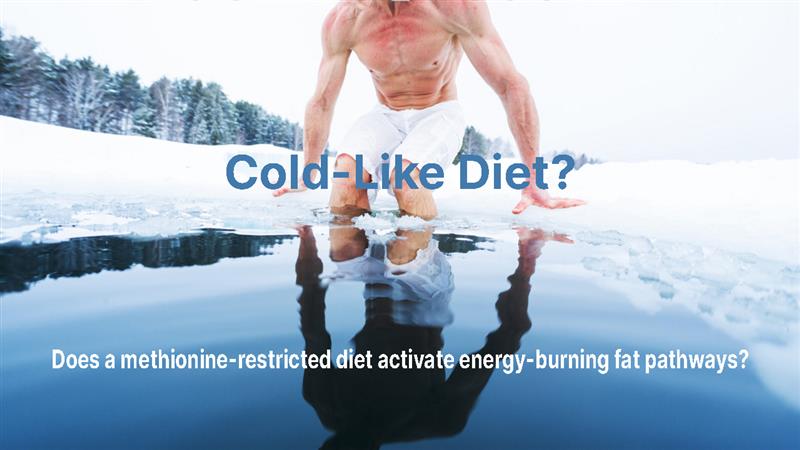
A new study suggests that restricting specific sulfur-containing amino acids in the diet may trigger metabolic effects similar to cold exposure—one of the body’s strongest natural stimulators of calorie burning. Researchers found that limiting methionine and cysteine increased energy expenditure and pushed the body toward burning more fat, potentially offering a new strategy to combat obesity.
Diet Change That Tricks the Body Into Burning More Energy
Scientists are exploring whether a subtle dietary tweak could replicate the metabolic boost normally triggered by cold temperatures.
In a new study, researchers from the University of Southern Denmark examined what happens when mice eat a diet low in sulfur-containing amino acids—specifically methionine and cysteine. These nutrients are essential components of many proteins, but reducing them appears to reshape the body’s metabolism.
The team discovered that restricting methionine increased energy expenditure by roughly 20%, even when animals were kept at room temperature. At the same time, the mice shifted their metabolism toward burning fats instead of carbohydrates.
Surprisingly Similar to the Effects of Cold
Cold exposure is known to activate brown adipose tissue (BAT)—a special type of fat that burns calories to generate heat. This process, called non-shivering thermogenesis, is one of the body’s most powerful mechanisms for increasing energy expenditure.
Interestingly, the dietary intervention triggered many of the same biological pathways.
The researchers found that methionine restriction and cold exposure produced overlapping gene-expression patterns in certain fat tissues, particularly in inguinal white adipose tissue, which can transform into energy-burning “beige fat.”
However, the responses were not identical. In brown fat, cold exposure remained the dominant driver of thermogenic gene activation, while diet played a smaller role.
A Tissue-Specific Metabolic Response
he study used RNA sequencing to examine metabolic changes across several tissues, including:
- Liver
- Brown adipose tissue
- Inguinal white adipose tissue
- Epididymal white adipose tissue
Each tissue responded differently to the diet and temperature changes, suggesting that metabolic regulation is highly organ-specific.
For example:
- Liver: Cold exposure dominated gene activity.
- Brown fat: Thermogenic genes were mainly activated by cold.
- Beige-capable white fat: Diet and cold produced additive effects.
Implications for Obesity Treatment
The researchers propose that methionine restriction may function as a diet-induced thermogenesis stimulus, increasing calorie burning without requiring environmental stress such as cold exposure.
Because obesity rates continue to rise worldwide and current treatments—such as GLP-1 drugs—may reduce energy expenditure over time, strategies that increase metabolic rate could become important complements to existing therapies.
Why This Matters for GeneFit Readers
This research highlights how specific nutrient composition—not just calories—can reshape metabolism. If similar mechanisms occur in humans, genetic testing combined with personalized nutrition could help identify individuals who may benefit from targeted amino-acid modulation to enhance fat metabolism and energy expenditure. For platforms like GeneFit, this reinforces the idea that precision nutrition and metabolic genetics may play a major role in future obesity and performance strategies.
Reference
Ruppert, P. M. M., Güller, A. S., Rosendal, M., Stanic, N., & Kornfeld, J.-W. (2025). Dietary sulfur amino acid restriction elicits a cold-like transcriptional response in inguinal but not epididymal white adipose tissue of male mice. eLife, Reviewed Preprint. https://doi.org/10.7554/eLife.108825
Disclaimer: The information on this website is for educational purposes only and does not constitute medical advice, diagnosis, or treatment. Content is based on publicly available scientific sources and does not replace consultation with a DHA-licensed healthcare professional. No claims are made that this information can prevent, diagnose, or cure any disease. Individual results may vary. GeneFit Clinics assumes no responsibility for any consequences arising from the use of this information.

Ready to unlock your potential?
Your body deserves better than guesswork.
Book a consultation to discover a personalised transformation experience, built on your unique biology and delivered with concierge-level care.