

From BMI to Precision Health: A Needed Shift in Assessment
A new study using advanced body composition analysis shows that BMI may significantly misclassify individuals’ weight status—raising serious concerns about its reliability in clinical and fitness settings.
Is BMI Still a Reliable Measure of Health? New Evidence Says Otherwise
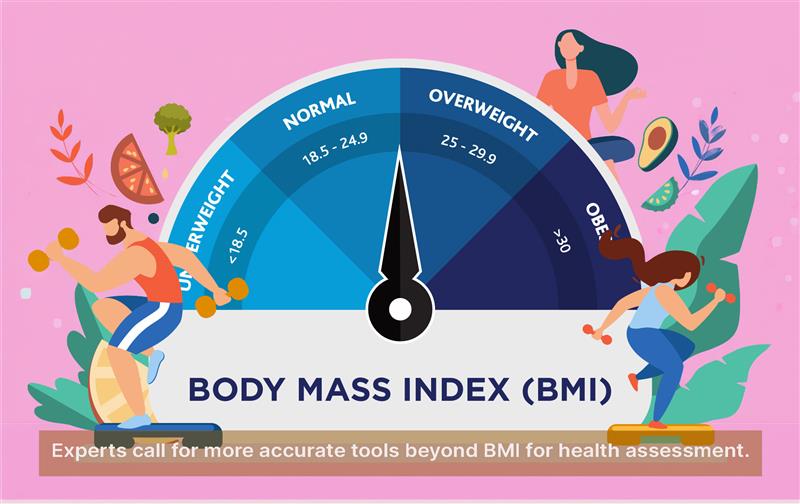
For decades, Body Mass Index (BMI) has been the go-to tool for assessing whether someone is underweight, normal weight, overweight, or obese. But a new study published in the journal Nutrients suggests that this widely used metric may be far less accurate than previously thought.
Researchers analyzed adults aged 18 to 98 in Northern Italy using dual-energy X-ray absorptiometry (DXA), a gold-standard method for measuring body composition. Their goal: to compare BMI classifications with actual fat mass and body composition data.
The results were striking.
The study found that BMI frequently misclassified individuals—especially when distinguishing between fat mass and lean mass. Many individuals categorized as “normal weight” actually had excess body fat (a condition often referred to as “normal-weight obesity”), while others labeled as overweight or obese had healthy body composition due to higher muscle mass.
Why BMI Falls Short
BMI is calculated using only height and weight, without considering critical factors such as:
- Muscle mass
- Fat distribution
- Bone density
- Age-related body changes
This simplicity makes BMI easy to use—but also dangerously imprecise.
The study highlights that BMI’s limitations become more pronounced across different age groups and body types. For example, older adults may have higher body fat despite a “normal” BMI, while athletes may be wrongly classified as overweight.
DXA: A More Accurate Alternative
Unlike BMI, DXA scans provide a detailed breakdown of body composition, including fat mass, lean mass, and bone density. This allows for a far more precise assessment of metabolic health and disease risk.
The researchers argue that relying solely on BMI could lead to:
- Underdiagnosis of obesity-related risks
- Misguided clinical decisions
- Ineffective or inappropriate treatment plans

A Shift Toward Precision Health
This study adds to a growing body of evidence suggesting that health assessments should move beyond BMI toward more personalized and precise tools.
While BMI may still have value as a quick screening tool at the population level, it is increasingly clear that it should not be used in isolation—especially in clinical or performance settings.
Why This Matters for GeneFit Readers
At GeneFit Clinic, where precision and personalization are central, this study strongly reinforces the importance of body composition analysis over traditional metrics like BMI.
For clients:
- You may be “healthy” according to BMI—but still carry harmful levels of fat
- Or you may be labeled “overweight” despite having high muscle mass
This is exactly where advanced technologies (like body composition scans) provide real value—helping tailor:
- Fat loss programs
- Muscle-building strategies
- Metabolic health interventions
Bottom line: If you want truly accurate health insights, BMI alone is not enough.
Reference
Milanese, C., Itani, L., Cavedon, V., & El Ghoch, M. (2025). The WHO BMI system misclassifies weight status in adults from the general population in North Italy: A DXA-based assessment study (18–98 years). Nutrients, 17(13), 2162. https://doi.org/10.3390/nu17132162
Disclaimer: The information on this website is for educational purposes only and does not constitute medical advice, diagnosis, or treatment. Content is based on publicly available scientific sources and does not replace consultation with a DHA-licensed healthcare professional. No claims are made that this information can prevent, diagnose, or cure any disease. Individual results may vary. GeneFit Clinics assumes no responsibility for any consequences arising from the use of this information.

Ready to unlock your potential?
Your body deserves better than guesswork.
Book a consultation to discover a personalised transformation experience, built on your unique biology and delivered with concierge-level care.