

Is Your Brain Making You Eat More Fat? Scientists Find a Surprising Clue
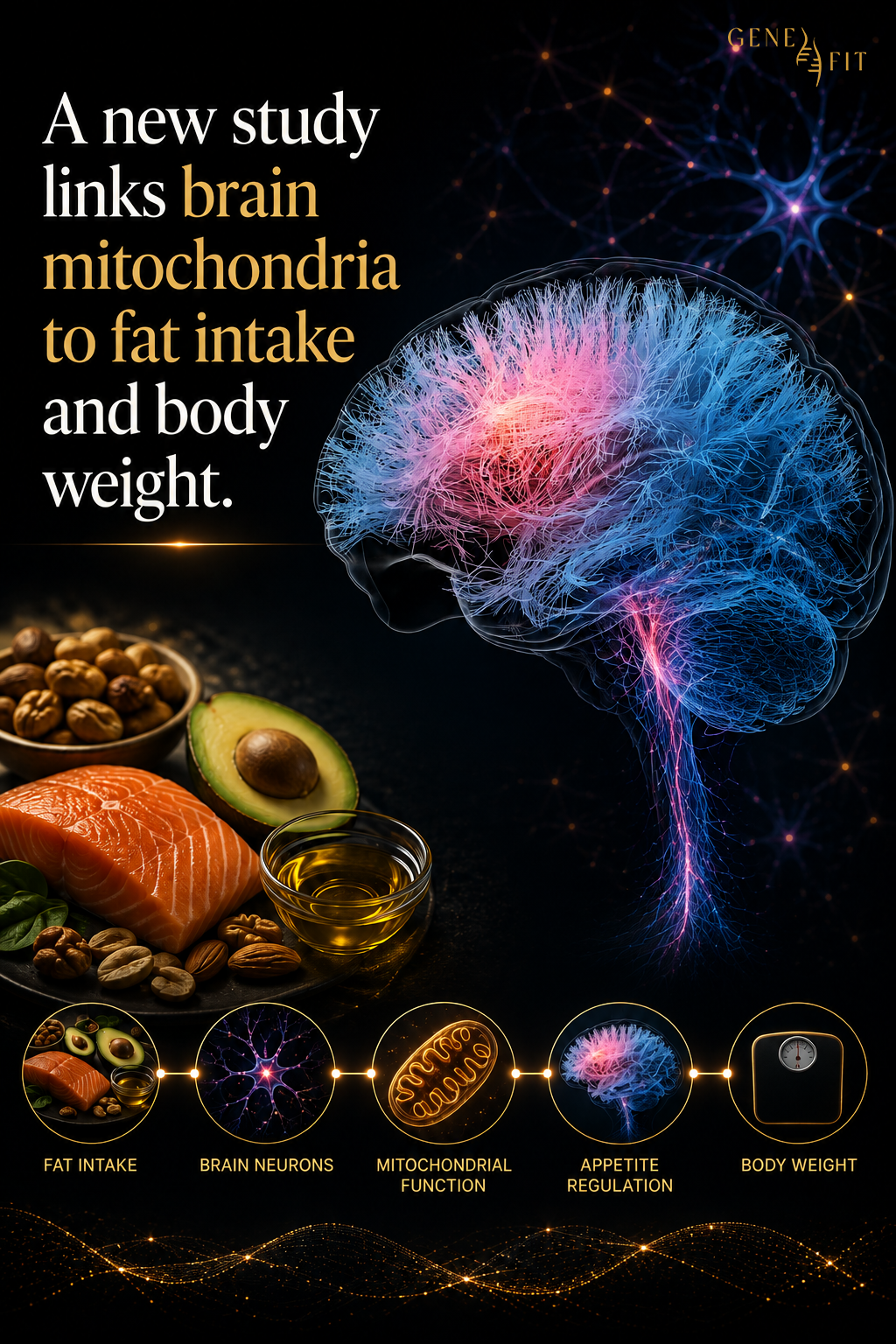
A new study in The FASEB Journal has identified a surprising link between mitochondrial function in appetite-regulating brain cells and dietary fat intake. Researchers found that a mitochondrial protein called OPA1, located in MC4R-expressing neurons in the hypothalamus, helps regulate how much dietary fat mice consume and how their body weight changes. When OPA1 was removed from these neurons, mice consumed more soybean oil and gradually became obese. The effect was particularly pronounced in females. The findings suggest that the brain's ability to manage appetite may depend not only on hormones and neural signals, but also on the health and function of mitochondria inside specific neurons.
Key Takeaways
- 🧠 Brain mitochondria may influence eating behaviour. OPA1 in MC4R neurons was linked to the regulation of dietary fat intake and body weight.
- 🥄 Loss of OPA1 increased fat consumption. Mice lacking OPA1 in MC4R neurons consumed significantly more soybean oil.
- ⚖️ Weight gain followed increased intake. OPA1-deficient mice developed progressive obesity, even when eating a normal diet.
- ♀️ The effect was stronger in females. Female mice showed greater weight gain and a weaker appetite-suppressing response to an MC4R agonist.
- 🧬 Diet can affect the brain at the mitochondrial level. Soybean oil intake increased OPA1 expression in the hypothalamus of male mice.
- 🔬 This is an animal study. The findings are important mechanistically, but they do not yet demonstrate that the same OPA1 mechanism controls dietary fat intake in humans.
Could Your Brain's Mitochondria Help Control How Much Fat You Eat?
When we think about weight regulation, we usually focus on calories, hormones, metabolism and willpower.
But new research suggests that the story may begin much deeper inside the brain, at the level of mitochondria inside specific neurons.
A study published in The FASEB Journal has identified OPA1, a protein involved in mitochondrial structure and function, as an important component of the machinery that connects dietary fat intake with appetite and body weight.
The brain region behind appetite control
The researchers focused on neurons containing melanocortin 4 receptors, or MC4R, in the hypothalamus.
MC4R is one of the body's major systems for controlling appetite and energy balance. When this pathway is activated, food intake generally falls and energy expenditure increases. Disrupting MC4R signaling can produce severe obesity in mice, while mutations affecting MC4R are also a well-established cause of inherited obesity in humans.
The researchers wanted to know whether mitochondria inside these neurons could influence how this system responds to dietary fat.
Their focus was OPA1, a protein located in the inner mitochondrial membrane that helps maintain mitochondrial structure and function.
What happens when OPA1 is removed?
The researchers genetically removed OPA1 specifically from MC4R-expressing neurons in mice.
The results were striking.
Mice lacking OPA1 in these neurons gradually gained more weight than control animals. The increase became particularly apparent during adulthood, beginning at around 18 to 20 weeks of age.
The animals also consumed more food, suggesting that increased appetite contributed substantially to their weight gain.
The effect became even clearer when soybean oil was made freely available.
Both male and female OPA1-deficient mice consumed more soybean oil than control animals. Their body weight also increased more rapidly after dietary fat became available.
In other words, disrupting mitochondrial function in these appetite-regulating neurons appeared to change how the animals responded to dietary fat.
The effect was stronger in females
One of the most interesting findings was the difference between males and females.
Female mice lacking OPA1 developed a more pronounced obesity phenotype than males. They also showed a weaker appetite-suppressing response when researchers activated the MC4R pathway pharmacologically.
This suggests that mitochondrial regulation of appetite may not work identically in males and females.
The researchers propose that sex hormones, particularly estrogen, could potentially contribute to these differences because estrogen signaling is already known to interact with both MC4R pathways and mitochondrial function.
However, this remains a hypothesis rather than a demonstrated mechanism in this study.
Dietary fat also changed mitochondrial signals
The researchers also found that voluntary soybean oil consumption increased expression of Opa1 and other mitochondrial-related genes in the hypothalamus of male mice.
This is particularly interesting because it suggests that the brain may actively adapt its mitochondrial machinery in response to dietary fat.
Rather than mitochondria simply being passive energy-producing structures, they may participate in how neurons detect and respond to changes in nutrient availability.

It's not simply about calories
One important aspect of the study is that the researchers were examining more than the simple equation of "more calories equals more weight."
Previous work from the same research group has shown that different types of dietary fat can produce different metabolic responses in mice. Soybean oil, for example, does not necessarily produce the same metabolic effects as a conventional lard-based high-fat diet.
The current findings add another layer to this picture: the brain may respond differently to dietary fat depending on the mitochondrial state of specific neurons.
What does this mean for humans?
The findings are intriguing, but they should not be interpreted as evidence that OPA1 determines obesity risk in humans or that dietary fat directly damages these brain mitochondria.
This was a mouse study involving genetically modified animals, and the researchers manipulated OPA1 specifically in MC4R-expressing neurons.
The human relevance remains to be established.
Nevertheless, the study highlights an important direction in metabolic research: understanding obesity may require looking beyond the amount of food we eat and examining how neurons, mitochondria, hormones and nutrients interact to regulate appetite.
For precision health, this is particularly interesting because it reinforces the idea that body-weight regulation is not controlled by a single pathway. It emerges from interactions between genetics, brain biology, metabolism, diet and individual physiological responses.
Why This Matters for GeneFit Readers
Weight management is often presented as a straightforward calculation of calories consumed versus calories burned.
This study suggests that the biology controlling that equation is considerably more complex.
The researchers identified a connection between mitochondrial function, specific appetite-regulating neurons and dietary fat consumption. Although the findings are currently limited to mice, they add to a growing body of evidence showing that metabolic regulation is deeply influenced by biological mechanisms inside the brain.
For GeneFit readers, the broader message is important: individual differences in weight regulation may involve biological mechanisms that are not visible from diet and exercise behavior alone.
Genetics, neural signaling, mitochondrial function, hormonal regulation and nutritional exposure can interact in complex ways. Understanding these systems may ultimately contribute to more individualized approaches to nutrition and metabolic health.
At the same time, this study does not mean that people should avoid soybean oil or that OPA1 testing can currently predict obesity. Much more research, particularly in humans, is needed before these findings can be translated into clinical recommendations.
Reference
Matsumura, S., Fujiwara, M., Horie, S., Marutani, M., Nousou, E., Iki, N., Yamato, Y., Otonashi, Y., Sasaki, T., Fujitani, M., & Fujikawa, T. (2026). OPA1 in MC4R neurons regulates dietary fat intake and body weight in mice. The FASEB Journal, 40(10), e71941. https://doi.org/10.1096/fj.202600452R
Disclaimer: The information on this website is for educational purposes only and does not constitute medical advice, diagnosis, or treatment. Content is based on publicly available scientific sources and does not replace consultation with a DHA-licensed healthcare professional. No claims are made that this information can prevent, diagnose, or cure any disease. Individual results may vary. GeneFit Clinics assumes no responsibility for any consequences arising from the use of this information.

Ready to unlock your potential?
Your body deserves better than guesswork.
Book a consultation to discover a personalised transformation experience, built on your unique biology and delivered with concierge-level care.