

New Genetic Discoveries Reveal Why Some People Develop Keloid Scars
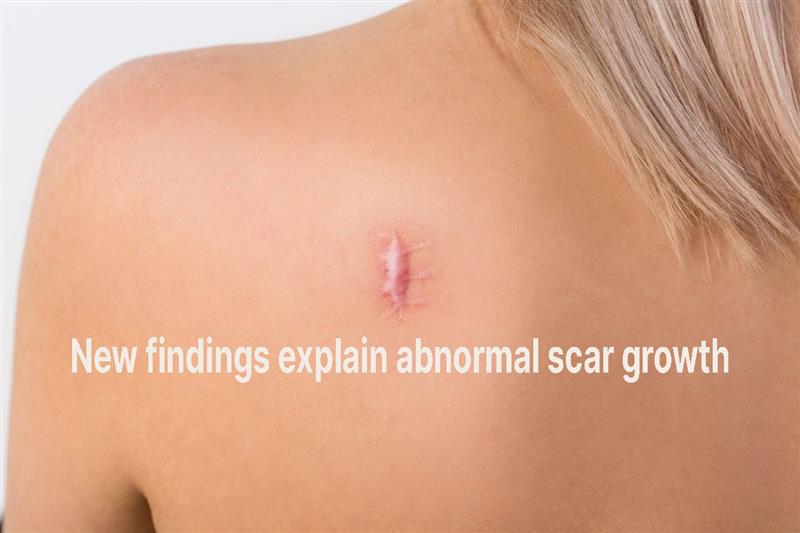
Scientists analyzed genetic data from thousands of people with and without keloids. They found 26 new genetic regions linked to a higher risk of developing keloid scars. The genetic effect was strongest in people of African ancestry and weaker in other populations. Many of these genes are active in skin and scar-forming cells. These findings help explain why keloids develop and may lead to better prevention and treatment in the future.
Scientists studied the genes of more than 7,800 people with keloids and over 1.5 million people without keloids from different ethnic backgrounds. Keloids are thick, raised scars that grow beyond the original wound and can cause pain, itching, and emotional stress.
The researchers wanted to understand why some people develop keloids and others do not. By comparing their genetic data, they discovered 26 new genetic regions that increase the risk of developing keloids.
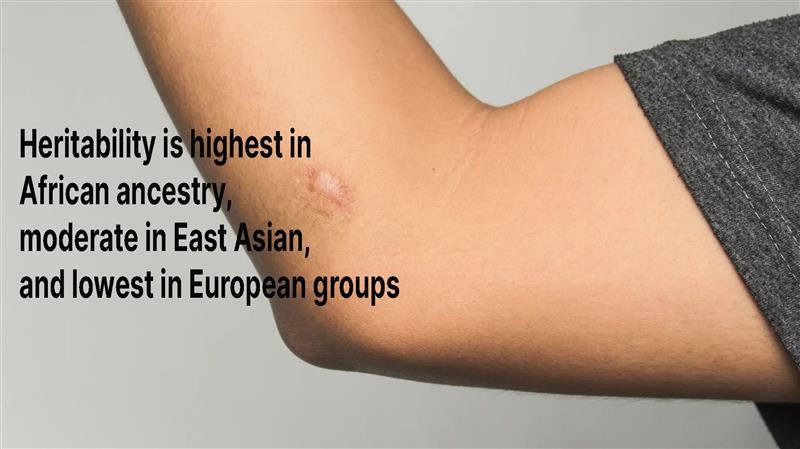
They also found that the genetic influence on keloids is different between populations:
- People of African ancestry showed the strongest genetic effect.
- People of East Asian ancestry showed a moderate effect.
- People of European ancestry showed a smaller genetic effect.
This shows that studying people from different backgrounds is very important for understanding this condition.
The scientists looked deeper into how these genes work in the body. They found that many of the genes are active in skin cells and fibroblasts, which are the cells responsible for healing wounds and forming scars.
Their analysis showed that several biological pathways are involved in keloid formation, including:
- Cell adhesion (integrin signaling)
- Fibrosis (excess tissue growth)
- Hormone-related pathways
- Pathways also linked to cancer and abnormal cell growth
These results suggest that keloids share some biological features with other diseases that involve uncontrolled tissue growth.
Overall, this study greatly increases what we know about the genetics of keloids. It helps explain why keloids are more common in some populations and points to possible targets for future treatments and prevention strategies.
Why This Matters for GeneFit Readers
Keloids are more than cosmetic — they can cause itching, pain, limited mobility, and psychological distress. This study’s multi-ancestry approach is especially relevant for the GeneFit community because:
- Broader Genetic Insight: It enriches our understanding of how genetic differences across populations contribute to scar formation and wound healing dynamics — key components of both clinical care and personalized health planning.
- Biological Pathway Clues: The genes and pathways highlighted (like integrin signaling) intersect with processes important in fibrosis, tissue repair, and mechanotransduction — areas relevant to fitness, rehabilitation, and even aging biology.
- Potential Future Targets: By identifying new genetic risk loci, researchers open doors to targeted therapies or preventive approaches that can improve scar outcomes and inform personalized risk assessments.
- Ancestry Representation: The study’s inclusion of diverse populations underscores the importance of genetic equity — ensuring that GeneFit insights benefit individuals of all backgrounds.
Reference
Greene, C. A., Hampton, G., Jaworski, J., Shuey, M. M., Khan, A., Luo, Y., Jarvik, G. P., Namjou-Khales, B., Edwards, T. L., Velez Edwards, D. R., & Hellwege, J. N. (2025). Multi-ancestry meta-analysis of keloids uncovers novel susceptibility loci in diverse populations. Nature Communications, 16(1), 7770. https://doi.org/10.1038/s41467-025-62945-x
Disclaimer: The information on this website is for educational purposes only and does not constitute medical advice, diagnosis, or treatment. Content is based on publicly available scientific sources and does not replace consultation with a DHA-licensed healthcare professional. No claims are made that this information can prevent, diagnose, or cure any disease. Individual results may vary. GeneFit Clinics assumes no responsibility for any consequences arising from the use of this information.

Ready to unlock your potential?
Your body deserves better than guesswork.
Book a consultation to discover a personalised transformation experience, built on your unique biology and delivered with concierge-level care.