

New Twin Study Suggests Genetics May Strongly Shape IQ and Future Socioeconomic Success
A new study published in Scientific Reports found that genetics may explain much of the connection between intelligence and future socioeconomic status. Researchers analyzing German twin data reported that IQ measured in early adulthood strongly predicted education and career outcomes four years later, with genetic factors accounting for most of that association.
The long-running debate over whether intelligence or environment plays the bigger role in life success has gained a new layer of evidence.
A study published in Scientific Reports examined how cognitive ability in young adults relates to future socioeconomic status and found that genetics may account for a surprisingly large share of the connection. The research used data from the German TwinLife project, which follows thousands of twins and families over time.

The study tracked participants between the ages of 23 and 27 and analyzed how IQ scores predicted later educational achievement and occupational status. Researchers compared identical twins, who share nearly all their genes, with fraternal twins, who share roughly half.

Dr. Ali Issapour
GeneFit FounderI see genetic testing as a promising tool to better understand individual strengths and learning tendencies. Research suggests genetics can significantly influence cognitive traits and life outcomes. However genes are not destiny. Environment, education, and personal effort remain critical in shaping capabilities. The real value lies in using these insights to personalise development; not to 'label' or limit individuals.
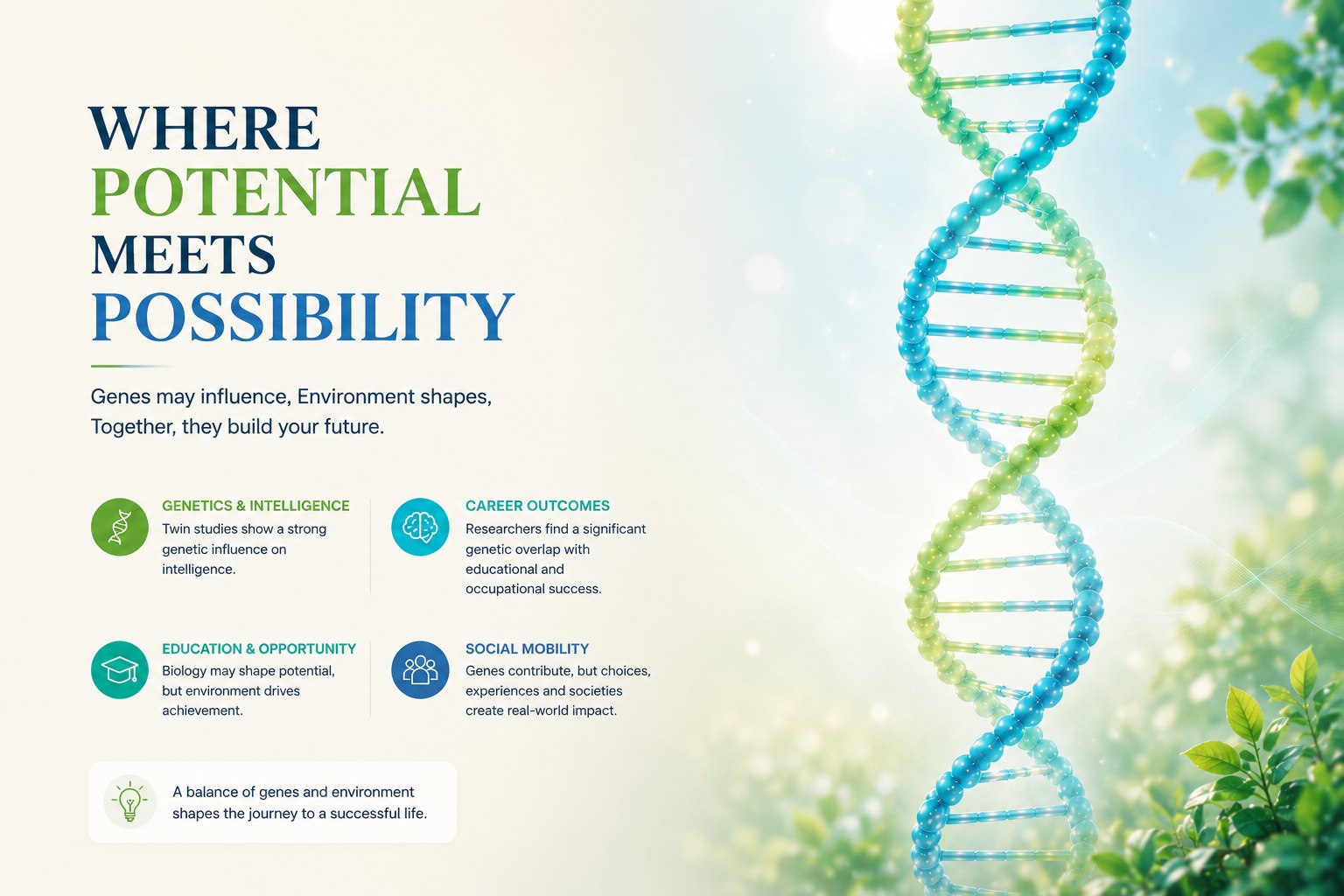
The results showed that IQ strongly predicted both education level and career outcomes several years later. More notably, the study estimated that genetic factors explained between 69% and 98% of the relationship between IQ and socioeconomic outcomes.
Researchers also reported that IQ itself appeared highly heritable in this sample, with approximately 75% of differences in cognitive ability linked to genetic variation.
The authors emphasized that the findings do not mean environment is irrelevant. Education systems, social opportunities, family support, and economic conditions still influence outcomes. However, the study argues that ignoring biological individuality may oversimplify how socioeconomic success develops.
The researchers noted that environmental influences appeared more important for educational outcomes than occupational outcomes, suggesting that schools and learning environments may still provide meaningful opportunities for social mobility.
Importantly, the study does not claim that genes determine destiny. Instead, it suggests that genetic predispositions may partly shape cognitive traits that later influence academic performance, career opportunities, and long-term social outcomes.
The authors also acknowledged several limitations. The follow-up period covered only four years, the sample focused on young adults in Germany, and many complex gene-environment interactions were not included in the analysis.
Still, the research adds to growing evidence that socioeconomic inequality cannot be explained entirely by external conditions alone. The findings may influence future discussions around education policy, workforce development, and personalized support systems.
Why This Matters for GeneFit Readers
This study highlights a growing shift toward personalized science. Human performance, learning ability, and long-term health outcomes are increasingly being understood as interactions between genetics and environment rather than purely lifestyle-driven effects.
For GeneFit readers, the findings reinforce the importance of precision health approaches that consider biological individuality. Genetics may influence not only disease risk, but also cognitive traits, motivation patterns, stress resilience, and behavioral tendencies that affect life outcomes.
As genetic testing and personalized wellness technologies evolve, understanding how biology interacts with environment could become central to future education, mental performance, and preventive health strategies.
Reference
Kajonius, P. J. (2026). Longitudinal associations between cognitive ability and socioeconomic status are partially genetic in nature. Scientific Reports, 16, 4315. https://doi.org/10.1038/s41598-026-37786-3
Disclaimer: The information on this website is for educational purposes only and does not constitute medical advice, diagnosis, or treatment. Content is based on publicly available scientific sources and does not replace consultation with a DHA-licensed healthcare professional. No claims are made that this information can prevent, diagnose, or cure any disease. Individual results may vary. GeneFit Clinics assumes no responsibility for any consequences arising from the use of this information.

Ready to unlock your potential?
Your body deserves better than guesswork.
Book a consultation to discover a personalised transformation experience, built on your unique biology and delivered with concierge-level care.