

Photobiomodulation Therapy: How Light Treatment Improves Brain Health and Cellular Function
A new scientific review explores how specific wavelengths of light may interact with cellular proteins and biological rhythms, positioning photobiomodulation as a potential precision medicine tool for neurological disorders, pain, and systemic health optimization.
A growing body of research suggests that light may do far more than illuminate—it could actively regulate human biology. A recent review published in Biomedicines examines the emerging concept of photobiomodulation (PBM) as a form of precision medicine, revealing how targeted light exposure may influence cellular and neurological function.
Photobiomodulation—previously known as low-level laser therapy—uses non-thermal light (typically red or near-infrared) to stimulate biological processes. Traditionally, its effects were attributed mainly to mitochondrial interactions, particularly through cytochrome c oxidase. However, this new review challenges that narrow view and proposes broader photophysical mechanisms underlying PBM.
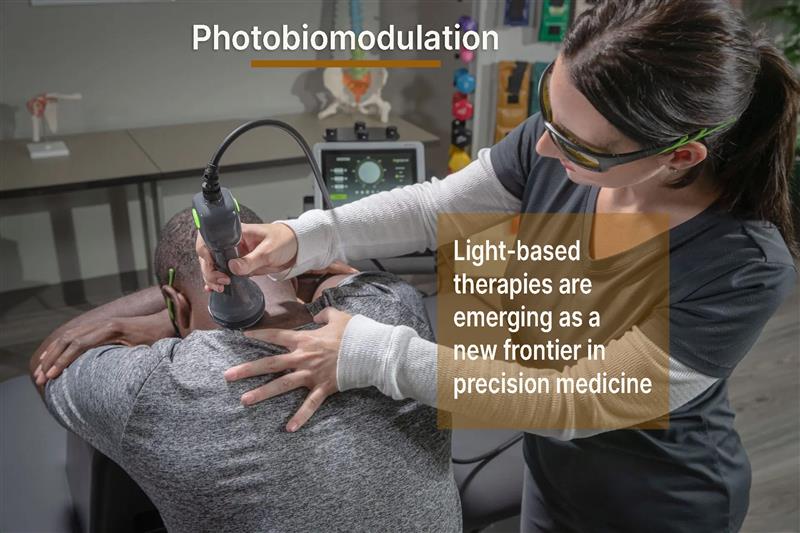
Beyond Mitochondria: A New Mechanistic Framework
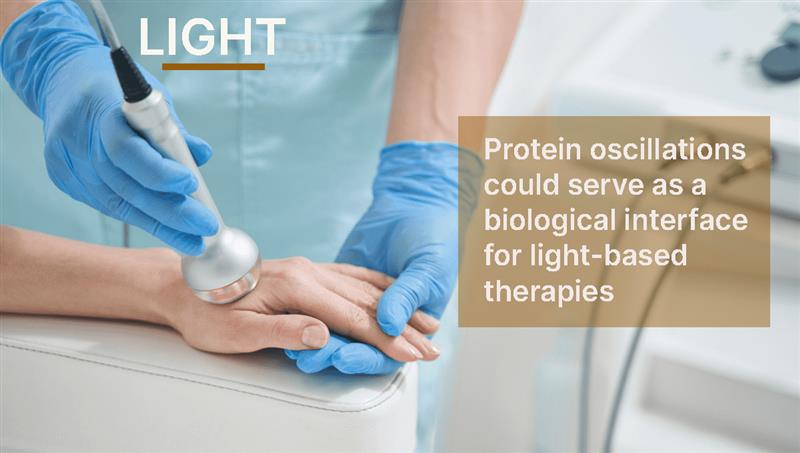
The authors highlight that light may interact with protein oscillations and cellular structures, triggering systemic biological responses. These oscillations—essentially rhythmic molecular vibrations—could act as a communication network within the body. By matching specific light wavelengths to these oscillatory patterns, PBM may influence cellular behavior in a highly targeted way.
This concept aligns with the idea of resonance-based medicine, where biological systems respond selectively to external physical stimuli like light. Such mechanisms could explain how PBM affects not only local tissues but also distant organs and even brain activity.
Implications for Brain Health and Neurological Disorders
One of the most promising applications lies in the brain. The review suggests that PBM may help regulate neural oscillations, particularly gamma waves, which are often disrupted in conditions like Alzheimer’s disease, migraine, and fibromyalgia.
By restoring these rhythms, transcranial PBM could offer a non-invasive approach to treating neurological disorders linked to dysfunctional brainwave activity.
Systemic Effects and Precision Medicine Potential
Beyond neurology, PBM may influence:
- Cellular energy production (ATP synthesis)
- Oxidative stress and inflammation
- Gene expression and signaling pathways
- Ion channel activity and mitochondrial communication
These wide-ranging effects suggest that PBM could be tailored to individual patients—delivering precision medicine through light.
A Shift Toward Bioelectromagnetic Medicine
The authors propose that understanding PBM requires moving beyond traditional biochemical models toward a bioelectromagnetic perspective, where light, energy, and cellular structure interact dynamically.
If validated through further research, this paradigm could redefine therapeutic strategies across multiple disciplines—from rehabilitation and sports medicine to chronic disease management.
Why This Matters for GeneFit Readers
This study directly supports the scientific foundation behind many GeneFit technologies, especially those using energy-based or electromagnetic stimulation.
For GeneFit clinics, this means:
- Stronger scientific positioning for Emsculpt, EMS, and light-based therapies
- New opportunities to integrate PBM into recovery, neurology, and performance protocols
- A compelling narrative: shifting from “device-based treatments” to precision bio-optimization
Most importantly, it opens the door to positioning GeneFit not just as a clinic—but as a next-generation health optimization platform rooted in advanced biophysics.
Reference
Liebert, A., Capon, W., Pang, V., Vila, D., Bicknell, B., McLachlan, C., & Kiat, H. (2023). Photophysical mechanisms of photobiomodulation therapy as precision medicine. Biomedicines, 11(2), 237. https://doi.org/10.3390/biomedicines11020237
Disclaimer: The information on this website is for educational purposes only and does not constitute medical advice, diagnosis, or treatment. Content is based on publicly available scientific sources and does not replace consultation with a DHA-licensed healthcare professional. No claims are made that this information can prevent, diagnose, or cure any disease. Individual results may vary. GeneFit Clinics assumes no responsibility for any consequences arising from the use of this information.

Ready to unlock your potential?
Your body deserves better than guesswork.
Book a consultation to discover a personalised transformation experience, built on your unique biology and delivered with concierge-level care.