

Pregnancy Diet Could Cut Postpartum Weight Retention by 77%, New Study Finds
A new study in Maternal & Child Nutrition journal shows that women who closely follow pregnancy dietary and lifestyle guidelines are far less likely to retain significant weight after childbirth. High adherence reduced the risk of excess postpartum weight retention by 77%, highlighting pregnancy as a critical window for long-term metabolic health.
A growing body of evidence suggests that pregnancy is not just a temporary physiological state, but a decisive metabolic window. A new study published in Maternal & Child Nutrition journal adds strong support to this idea, showing that adherence to structured dietary and lifestyle guidelines during pregnancy can dramatically reduce postpartum weight retention.
The research, conducted as part of a prospective cohort study in Lebanon, followed 152 women from the first trimester through six months after delivery. Researchers evaluated how closely participants followed the Lebanese National Dietary and Lifestyle Guidelines for Pregnancy and examined the impact on postpartum weight retention (PPWR).
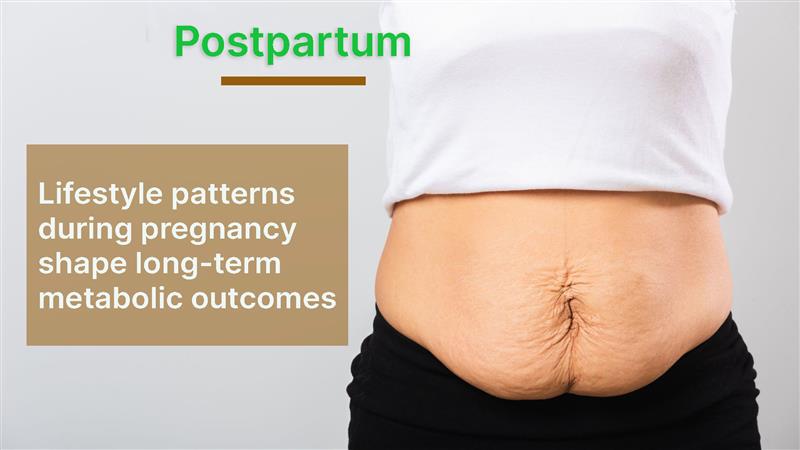
The findings were striking. Women with high adherence to the guidelines had a 77% lower likelihood of retaining more than 5.4 kg six months after childbirth compared to those with lower adherence.
Despite this strong association, adherence to key recommendations was generally poor. Only a small proportion of participants met targets for saturated fat intake (1.3%), sugar consumption (13.8%), hydration (21.7%), and omega-3 supplementation (38.8%).
On average, women retained 3.9 kg after pregnancy, and more than one-third retained at least 5 kg, underscoring the scale of the issue.
Interestingly, no single guideline alone was significantly associated with weight retention. Instead, it was the overall pattern of adherence that mattered. This reinforces a key concept in metabolic health: outcomes are driven by integrated lifestyle patterns rather than isolated behaviors.
From a clinical perspective, this aligns with the idea that pregnancy should be treated as a preventive intervention window, not just a monitoring period. Nutritional quality, weight gain control, hydration, and supplementation collectively shape postpartum recovery and long-term obesity risk.
Why This Matters for GeneFit Readers
This study directly supports the GeneFit philosophy: metabolism is programmable during key life transitions.
Pregnancy is one of the most powerful of these transitions. The findings suggest that:
- Postpartum weight retention is not inevitable
- Early intervention during pregnancy is far more effective than postnatal correction
- A systems-based approach (diet + lifestyle + behavior) is essential
For GeneFit clinics, this opens clear opportunities:
- Designing prenatal metabolic optimization programs
- Integrating nutrition, hydration, and supplementation protocols
- Using tracking tools to improve adherence, not just education
In simple terms: if you want to prevent obesity, start before the baby is born.
Reference
Chokor, F. A. Z., Eussen, S. J. P. M., Crone, M., Abdulmalik, M., Ayoub, J., Zgheib, P., Chatila, A., Nasreddine, L., & Naja, F. (2025). Adherence to the Lebanese National Dietary and Lifestyle Guidelines for Pregnancy and its association with postpartum weight retention. Maternal & Child Nutrition, 21(4), e70070. https://doi.org/10.1111/mcn.70070
Disclaimer: The information on this website is for educational purposes only and does not constitute medical advice, diagnosis, or treatment. Content is based on publicly available scientific sources and does not replace consultation with a DHA-licensed healthcare professional. No claims are made that this information can prevent, diagnose, or cure any disease. Individual results may vary. GeneFit Clinics assumes no responsibility for any consequences arising from the use of this information.

Ready to unlock your potential?
Your body deserves better than guesswork.
Book a consultation to discover a personalised transformation experience, built on your unique biology and delivered with concierge-level care.