

Scientists Reveal How Probiotics May Help Treat Depression Through the Gut–Brain Axis
A new scientific review highlights growing evidence that gut bacteria play a crucial role in mental health and may influence depression through complex communication pathways known as the gut–brain axis. Researchers suggest that probiotics could become a supportive therapy for mood disorders by regulating inflammation, neurotransmitter production, and stress responses. While early findings are promising, experts stress that larger and more standardized clinical trials are needed before probiotics can be widely recommended for depression treatment.
Researchers are uncovering a powerful new link between the human gut and the brain—one that could reshape how depression and mood disorders are treated in the future. A recent comprehensive review published in Frontiers in Pharmacology explores how probiotics may influence mental health by acting on the gut–brain axis, a bidirectional communication network connecting intestinal microbes with the central nervous system.
Depression affects hundreds of millions of people worldwide and remains one of the leading causes of disability. Although antidepressant medications and psychotherapy are effective for many patients, a significant proportion do not respond adequately or experience side effects. This has driven scientists to search for alternative or complementary biological approaches, including targeting the gut microbiome.
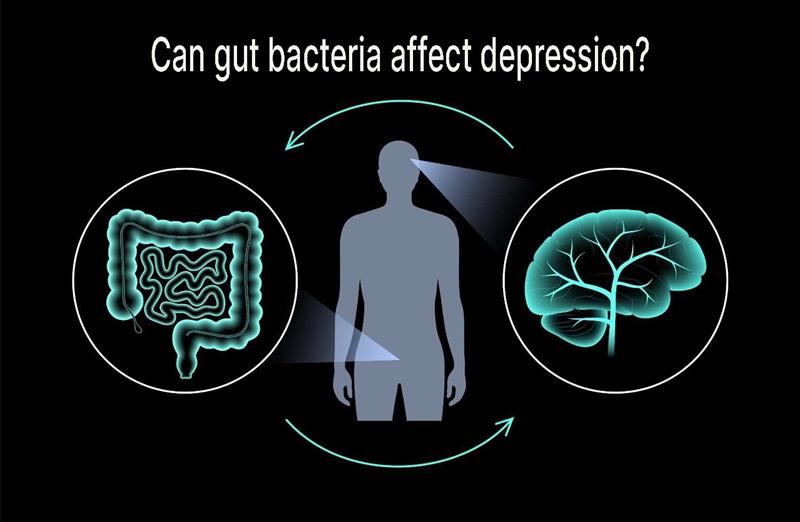
The Gut–Brain Connection
The gut–brain axis refers to the constant communication between gut bacteria, the immune system, hormones, and neural pathways such as the vagus nerve. According to the review, disturbances in gut microbiota—known as dysbiosis—are increasingly associated with depressive symptoms.
Studies show that individuals with major depressive disorder often display altered gut bacterial composition compared with healthy controls. These changes can affect brain function through several biological routes:
- Increased intestinal permeability (“leaky gut”), allowing inflammatory molecules to enter the bloodstream
- Chronic low-grade inflammation
- Altered metabolism of neurotransmitters such as serotonin, dopamine, and gamma-aminobutyric acid (GABA)
- Dysregulation of the hypothalamic-pituitary-adrenal (HPA) axis, which controls stress responses
Together, these mechanisms may contribute directly to mood disturbances and emotional regulation problems.
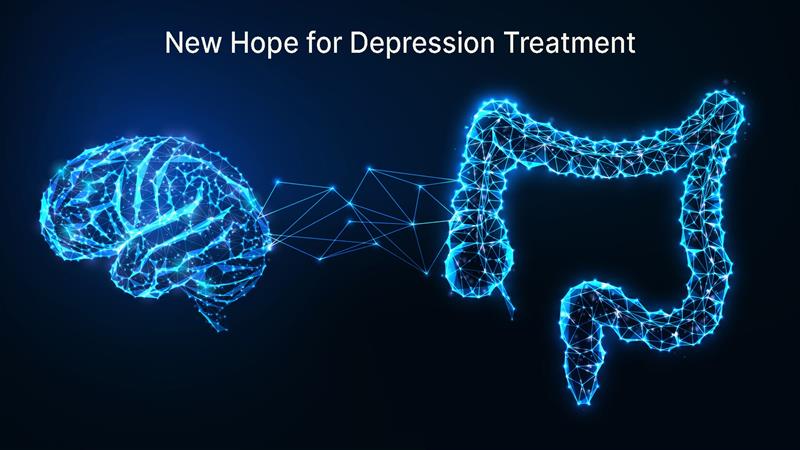
Probiotics as a Potential Therapy
Probiotics—live beneficial microorganisms commonly found in fermented foods and supplements—have attracted attention as possible modulators of the gut–brain axis. The review reports that specific strains of Lactobacillus and Bifidobacterium have demonstrated antidepressant-like effects in animal models and small human trials.
These probiotics appear to:
- Reduce systemic and brain inflammation
- Improve gut barrier integrity
- Increase production of neuroactive compounds
- Regulate stress hormone levels
- Support healthier microbial diversity
In several clinical studies, patients who consumed probiotic supplements showed improvements in depressive symptoms compared with placebo groups, especially when probiotics were used alongside conventional antidepressant therapy.
Beyond Probiotics: Other Microbiome Strategies
The authors also discuss other emerging microbiome-based approaches, including:
- Prebiotics (nutrients that feed beneficial bacteria)
- Synbiotics (a combination of probiotics and prebiotics)
- Postbiotics (metabolic byproducts of gut bacteria)
- Fecal microbiota transplantation (FMT), still considered experimental in psychiatric care
These strategies aim to restore microbial balance and enhance gut-brain signaling in a more targeted way.
Scientific Challenges and Limitations
Despite growing enthusiasm, the researchers caution that current evidence remains inconsistent. Many studies use different probiotic strains, dosages, treatment durations, and outcome measures. Sample sizes are often small, and long-term safety data are limited.
The review emphasizes the urgent need for large-scale, well-controlled clinical trials to determine:
- Which probiotic strains are most effective
- Optimal treatment duration
- Patient populations that benefit most
- Potential risks or interactions with psychiatric medications
Without such standardization, probiotics cannot yet be considered a replacement for established depression treatments.
Why This Matters for GeneFit Readers
Mental health is closely linked to physical health, metabolism, and inflammation—areas central to GeneFit’s mission. This research suggests that the gut microbiome may be a modifiable biological factor in depression, opening the door to personalized and non-invasive strategies for mood regulation. For GeneFit readers interested in precision health, nutrition, and preventive medicine, probiotics represent a promising frontier that connects genetics, gut health, and brain function. However, scientific caution is essential: probiotics should be viewed as a supportive tool rather than a stand-alone cure until stronger clinical evidence becomes available.
Reference
Wang, H., Chen, Y., Zhao, A., Shen, Z., & Zhang, Y. (2026). The role of probiotics in modulation of the gut-brain axis: A prospective therapy for depression and mood disorders. Frontiers in Pharmacology, 16, 1709060. https://doi.org/10.3389/fphar.2025.1709060
Disclaimer: The information on this website is for educational purposes only and does not constitute medical advice, diagnosis, or treatment. Content is based on publicly available scientific sources and does not replace consultation with a DHA-licensed healthcare professional. No claims are made that this information can prevent, diagnose, or cure any disease. Individual results may vary. GeneFit Clinics assumes no responsibility for any consequences arising from the use of this information.

Ready to unlock your potential?
Your body deserves better than guesswork.
Book a consultation to discover a personalised transformation experience, built on your unique biology and delivered with concierge-level care.