

Sleep Isn’t Just Rest: New Study Reveals How the Brain Controls Growth Hormone and Metabolism
A new study published in Cell Press uncovers the neural circuitry that precisely controls growth hormone release during sleep. The findings reveal how the brain balances hormone bursts with metabolic regulation, offering new insights into obesity, muscle growth, and sleep disorders.
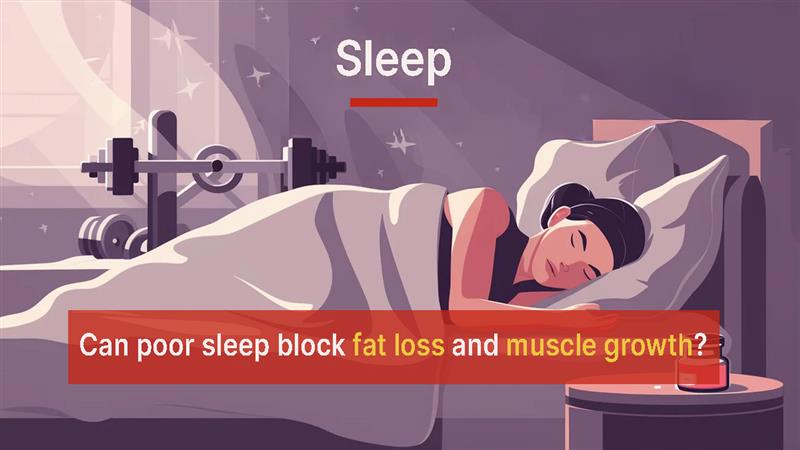
Sleep has long been associated with recovery and growth. But a new study in Cell goes deeper, revealing a tightly regulated brain circuit that controls when and how growth hormone is released.
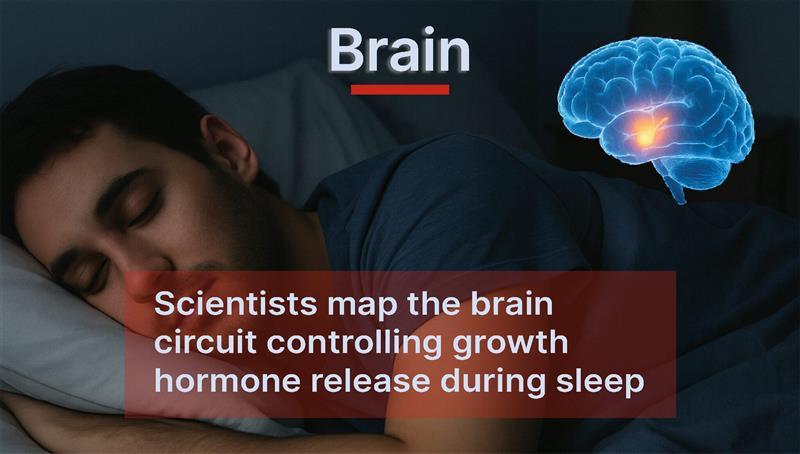
The research focuses on two key types of neurons in the hypothalamus. One group acts like an accelerator, promoting growth hormone release, while the other acts as a brake, suppressing it. During non-REM sleep, this balance shifts in favor of hormone release, creating the well-known nighttime surge in growth hormone.
During REM sleep, however, both systems activate simultaneously. This creates a controlled burst. Enough hormone is released to support growth and metabolism, but not so much that it disrupts physiological balance.
The study also reveals a surprising feedback loop. Once growth hormone levels peak, they activate neurons in the brain’s arousal center, specifically the locus coeruleus. This mechanism helps prevent excessive sleep and may explain why we naturally wake up after deep sleep phases.
Why does this matter beyond sleep biology? Growth hormone plays a central role in regulating glucose metabolism, fat utilization, and muscle development. Disruptions in this system have been linked to obesity, diabetes, and impaired recovery.
In simple terms, sleep is not just passive rest. It is an active metabolic control system. The brain is constantly adjusting hormonal output to balance growth, energy use, and wakefulness.
This research provides one of the clearest mechanistic links yet between sleep architecture and metabolic health.
Why This Matters for GeneFit Readers
This is exactly where GeneFit’s philosophy becomes relevant.
If sleep directly controls growth hormone pulses, then poor sleep is not just a lifestyle issue. It is a metabolic disruption.
For fat loss, this means:
- Reduced lipolysis
- Impaired insulin sensitivity
- Slower metabolic rate
For muscle and recovery:
- Blunted growth hormone release
- Reduced protein synthesis
- Slower regeneration
This study reinforces a key idea: optimizing body composition is not only about diet and training. It requires precise control of sleep quality and circadian rhythm.
At GeneFit, this opens the door to:
- Sleep-based metabolic interventions
- Personalized recovery protocols
- Integration of neuroendocrine monitoring into weight loss programs
In short, if you ignore sleep, you are leaving one of the most powerful metabolic levers untouched.
Reference
Ding, X., Hwang, F.-J., Silverman, D., Tian, Z. M., Ding, J., & Dan, Y. (2025). Neural regulation of sleep-dependent growth hormone release and arousal mechanisms. Cell. https://doi.org/10.1016/j.cell.2025.05.039
Disclaimer: The information on this website is for educational purposes only and does not constitute medical advice, diagnosis, or treatment. Content is based on publicly available scientific sources and does not replace consultation with a DHA-licensed healthcare professional. No claims are made that this information can prevent, diagnose, or cure any disease. Individual results may vary. GeneFit Clinics assumes no responsibility for any consequences arising from the use of this information.

Ready to unlock your potential?
Your body deserves better than guesswork.
Book a consultation to discover a personalised transformation experience, built on your unique biology and delivered with concierge-level care.