

What Are SNPs? Understanding the Genetic Variants Behind Personalized Medicine
Single nucleotide polymorphisms (SNPs) are the most common form of genetic variation in humans. These tiny DNA changes can influence disease risk, drug response, and individual biological traits. SNP analysis has become a cornerstone of modern genomics, enabling personalized medicine, disease risk assessment, and population genetics research.

By:
Dr. Homayoun Kheyri
Cell BiologistHead of Research and Development, GeneFit Clinics
What Are SNPs and Why Do They Matter?
The human genome contains billions of DNA letters, yet even a change in a single nucleotide can have important biological consequences. These variations are known as single nucleotide polymorphisms (SNPs), often pronounced "snips."
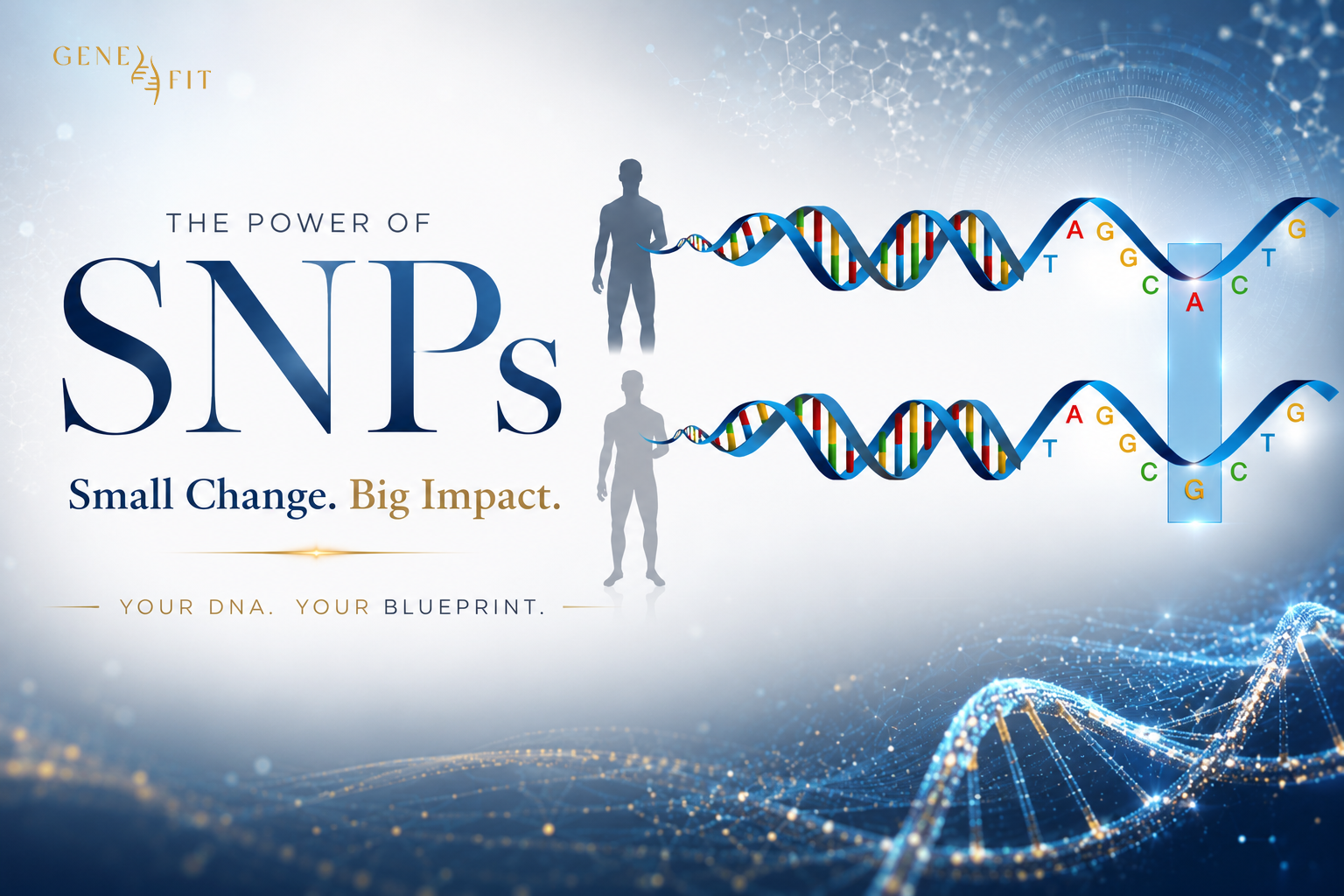
A SNP occurs when one DNA base, such as adenine (A), cytosine (C), guanine (G), or thymine (T), is replaced by another. To be classified as a SNP, the variation must be present in at least 1% of the population. SNPs represent the most common type of genetic variation among humans.
For example, one person may have a cytosine (C) at a particular genomic location, while another person has a thymine (T). Although this difference involves just a single DNA letter, it can sometimes affect how genes function or how proteins are produced.
How Common Are SNPs?
Scientists estimate that millions of SNPs exist throughout the human genome. Most occur in non-coding regions of DNA and have little or no direct effect on health. However, some SNPs occur within genes or regulatory regions, where they can influence biological processes and contribute to differences between individuals.
Because SNPs are so abundant and relatively stable across generations, they serve as valuable genetic markers for researchers studying human health and disease.
For example, one person may have a cytosine (C) at a particular genomic location, while another person has a thymine (T). Although this difference involves just a single DNA letter, it can sometimes affect how genes function or how proteins are produced.
How Common Are SNPs?
Scientists estimate that millions of SNPs exist throughout the human genome. Most occur in non-coding regions of DNA and have little or no direct effect on health. However, some SNPs occur within genes or regulatory regions, where they can influence biological processes and contribute to differences between individuals.
Because SNPs are so abundant and relatively stable across generations, they serve as valuable genetic markers for researchers studying human health and disease.
SNPs and Disease Risk
One of the most important applications of SNP research is identifying genetic susceptibility to disease.
SNP-based analyses have helped identify genetic factors associated with conditions such as cardiovascular disease, diabetes, cancer, and neurodegenerative disorders. However, most SNPs act as markers rather than direct causes of disease.
The Role of SNPs in Personalized Medicine
SNPs are also transforming how healthcare providers approach treatment.
Individuals often respond differently to the same medication. Some experience strong therapeutic effects, while others obtain limited benefit or develop adverse reactions. SNP analysis can help explain these differences by revealing genetic variations that influence drug metabolism and biological response.
This field, known as pharmacogenomics, aims to tailor treatments based on a person's genetic profile. In the future, SNP-informed prescribing may help clinicians select the most effective drug and dosage for each patient while reducing the risk of side effects.
Beyond Medicine: Understanding Human Origins
SNPs are valuable not only in healthcare but also in evolutionary and population genetics research.
Because SNP patterns accumulate over generations, they provide clues about ancestral relationships, migration patterns, and the evolutionary history of human populations. Researchers use these genetic markers to reconstruct population movements and better understand human diversity across the globe.
The Future of SNP-Based Genomics
As genomic technologies become more affordable and accessible, SNP analysis is expected to play an increasingly important role in preventive healthcare.
Combining SNP information with lifestyle, environmental, and clinical data could improve disease prediction, optimize treatment strategies, and support more personalized approaches to health management. Modern genetic testing platforms already incorporate SNP-based analyses into risk assessments for a growing range of health conditions.
What We Do at GeneFit
At GeneFit, we use SNP-based genetic analysis to transform complex genomic information into practical, personalized health insights. By examining key genetic variants associated with nutrition, metabolism, fitness, disease susceptibility, and medication response, we help individuals better understand their unique biological profile.
Our non-invasive genetic testing provides evidence-based guidance that supports more personalized health decisions while reducing unnecessary trial-and-error approaches. Rather than relying solely on population-wide recommendations, we combine genetic insights with clinical expertise to develop tailored strategies for health optimization, disease prevention, and long-term wellbeing.
As the field of precision medicine continues to advance, GeneFit remains committed to bringing scientifically validated genetic insights into everyday healthcare, empowering individuals to make more informed decisions about their health and lifestyle.
Disclaimer: The information on this website is for educational purposes only and does not constitute medical advice, diagnosis, or treatment. Content is based on publicly available scientific sources and does not replace consultation with a DHA-licensed healthcare professional. No claims are made that this information can prevent, diagnose, or cure any disease. Individual results may vary. GeneFit Clinics assumes no responsibility for any consequences arising from the use of this information.

Ready to unlock your potential?
Your body deserves better than guesswork.
Book a consultation to discover a personalised transformation experience, built on your unique biology and delivered with concierge-level care.