

When DNA Meets the Gym: AI-Powered Sportomics in Youth Performance
This preprint presents an interdisciplinary overview of how genetics and AI-driven sportomics can help parents and coaches make more informed, individualized decisions about training, recovery, injury prevention and nutrition in youth sports. It emphasizes the complementary role of genomics, proteomics, metabolomics and machine learning — and stresses responsible, ethical use of biological data.
New preprint highlights the emerging role of genetics and artificial intelligence in optimizing youth sports training — A recent preprint titled “Genetics and AI-Driven Sportomics: Empowering Parents and Coaches in Guiding Athletic Performance Enhancement” presents a comprehensive review of how molecular biology and AI-powered analytics can support more informed, individualized, and ethically grounded decision-making in youth athletic development.
Published on 8 January 2026 on the open-access platform Preprints.org, this version of the manuscript has not yet undergone peer review and reflects ongoing scientific discourse.
The authors — Swapnaja More, Dhanshree Pujari, Amrutha R Kenche, Deepthi Pilli, and Deepshikha Satish — outline how sportomics, the integration of genomics, proteomics, metabolomics and AI, can give nuanced insights into how a young athlete’s body responds to training stress, recovers from exercise, and handles injury risk.
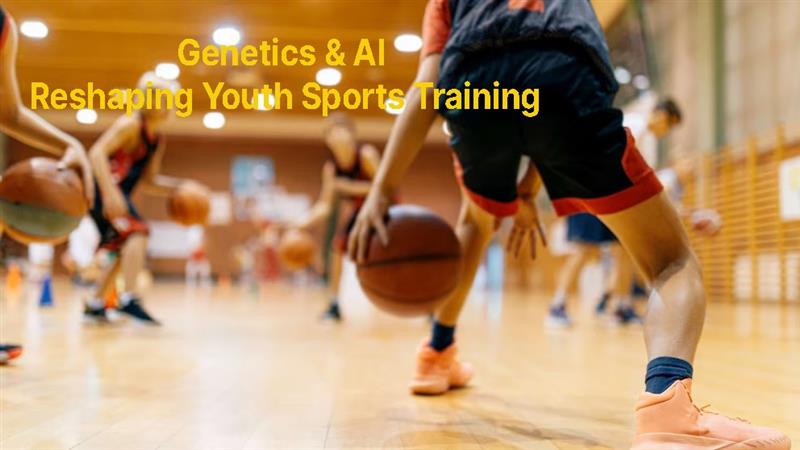
Traditional coaching methods often rely on observation and general fitness tests, but these can overlook biological differences between individuals. By combining molecular data with advanced analytics, parents and coaches can tailor training intensity, recovery strategies, and nutritional planning to an athlete’s unique biological profile.
The review explains how genomic variants — such as ACE I/D (associated with endurance), ACTN3 R577X (linked to muscle fiber type), and collagen-related genes influencing soft-tissue resilience — can help contextualize tendencies toward endurance, sprint performance, and injury susceptibility.
In addition to genomic profiling, the article discusses the value of proteomics and metabolomics in tracking recovery and energy metabolism, and how AI and machine learning can integrate these layers of data with wearable device metrics to produce actionable insights.
Ethics form a core part of the discussion: genetic and AI-derived insights should support children’s development and health, not constrain opportunities or lead to early pigeon-holing based on biological markers.
Key Takeaways:
- Sportomics provides a framework to understand individual biological responses to training.
- Genetic markers offer probabilistic—not deterministic—information about performance traits.
- AI tools help integrate complex biological and physiological data into practical training guidance.
- Ethical application is essential, ensuring data privacy and balanced use in child athletes.
WHY THIS MATTERS FOR GENEFIT READERS
This preprint intersects closely with GeneFit’s mission of empowering readers with science-based insights into how genetics can inform health and performance. While much of sport science has historically focused on observation and physical metrics alone, the integration of molecular profiling and AI analytics reflects a broader shift toward precision and personalization.
For GeneFit readers interested in genetics and lifestyle optimization, this review highlights:
- How biological individuality can be understood not as destiny but as guidance — helping tailor training, recovery and nutrition to support long-term wellbeing.
- The importance of interpreting genetic and biomolecular data within the context of overall health, motivation, and environment, especially for children.
- Ethical considerations around data privacy, fairness and responsible use — topics central to any genetic application in health and performance.
By combining science, data and ethics, this work signals how emerging technologies can enhance — not replace — human judgment in fitness and development.
Reference
More, S., Pujari, D., Kenche, A. R., Pilli, D., & Satish, D. (2026). Genetics and AI-Driven Sportomics: Empowering Parents and Coaches in Guiding Athletic Performance Enhancement (Version 1) [Preprint]. Preprints.org. https://doi.org/10.20944/preprints202601.0529.v1
Disclaimer: The information on this website is for educational purposes only and does not constitute medical advice, diagnosis, or treatment. Content is based on publicly available scientific sources and does not replace consultation with a DHA-licensed healthcare professional. No claims are made that this information can prevent, diagnose, or cure any disease. Individual results may vary. GeneFit Clinics assumes no responsibility for any consequences arising from the use of this information.

Ready to unlock your potential?
Your body deserves better than guesswork.
Book a consultation to discover a personalised transformation experience, built on your unique biology and delivered with concierge-level care.