

Why Dangerous Belly Fat Increases After Hip Fracture and How Scientists May Stop It
A new study suggests that topical testosterone therapy combined with exercise may help older women recovering from hip fractures reduce harmful visceral fat accumulation without changing overall body fat. The findings could open a new path for improving metabolic health and recovery outcomes in aging women.
A new clinical study is challenging traditional assumptions about hormone therapy and aging. Researchers found that testosterone treatment may help older women recovering from hip fractures prevent the buildup of dangerous visceral fat, a type of fat strongly linked to diabetes, cardiovascular disease, and metabolic dysfunction.
The study, published in Obesity Pillars, examined women over the age of 65 who were recovering from recent hip fractures. Hip fractures are among the most serious health events affecting older women, often leading to long-term disability, reduced independence, and increased risk of chronic disease.
Researchers investigated whether adding a topical testosterone gel to a structured rehabilitation exercise program could improve body composition during recovery.
The trial included 66 women who underwent body composition scans before and after the intervention. All participants participated in therapeutic exercise sessions, but only one group received testosterone therapy.
After six months, researchers observed something striking. Overall body fat percentages remained largely unchanged between groups. However, women receiving testosterone therapy showed significantly less visceral fat accumulation compared with participants who received exercise alone.
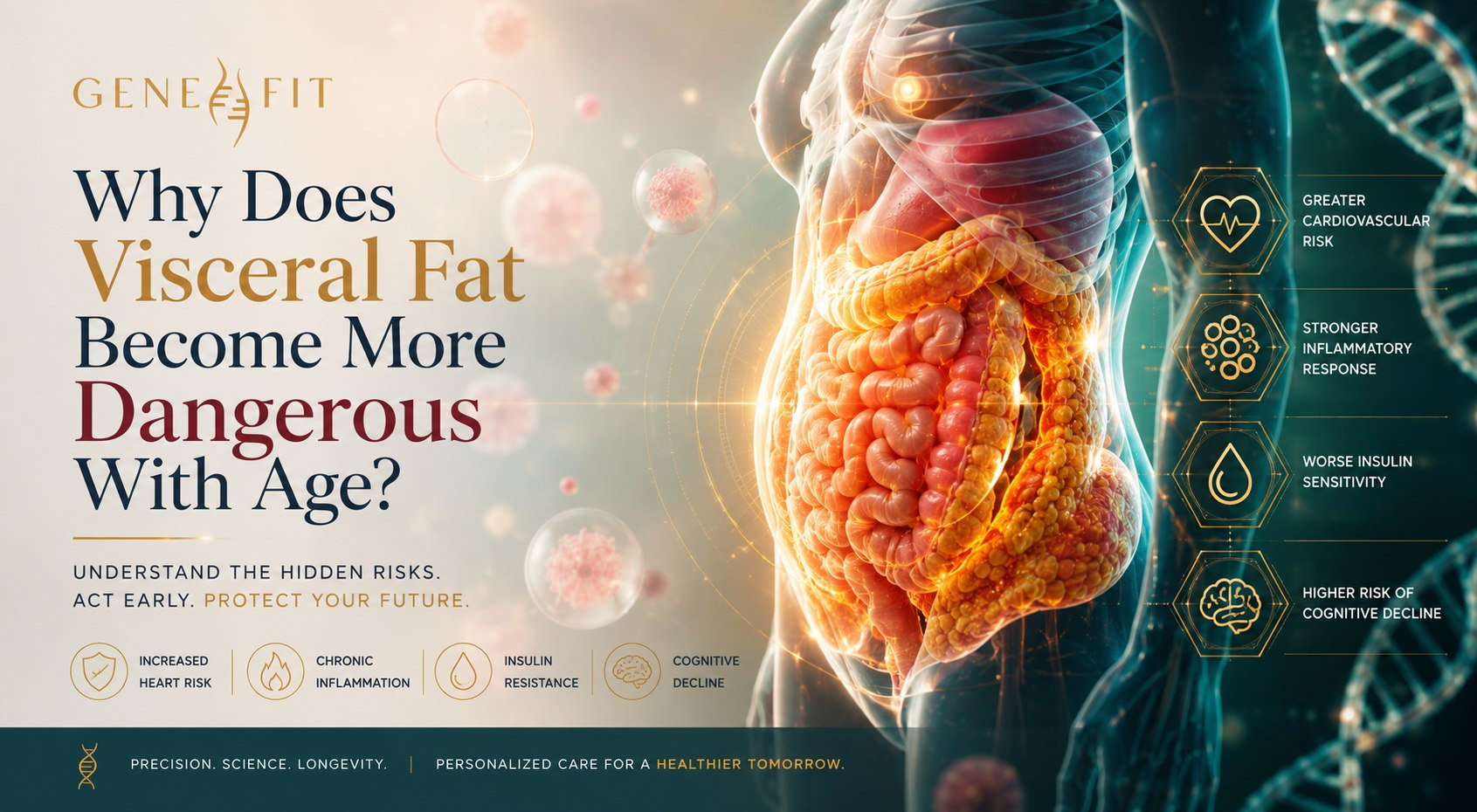
Visceral fat differs from the more common subcutaneous fat that sits under the skin. Instead, visceral fat surrounds internal organs and is associated with insulin resistance, inflammation, cardiovascular disease, and accelerated biological aging.
According to the researchers, aging naturally shifts fat storage toward the abdominal cavity, particularly after major injuries and periods of reduced physical activity. Hip fractures often worsen this process because mobility declines dramatically during recovery.
The testosterone-treated group appeared to resist this unhealthy fat redistribution.

Heba Omar
Senior Health Educator NurseSometimes it starts with small changes that people don’t pay much attention to a little abdominal (visceral) fat around the waist, lower energy levels, or feeling more tired than usual. But medically, abdominal fat especially visceral fat stored deep around the organs can be more than just weight gain. Over time, it may affect metabolism, blood sugar regulation, blood pressure, hormones, and overall cardiovascular health. As we age, the body naturally loses muscle mass and metabolic activity slows down, which can make maintaining a healthy weight more difficult if lifestyle and health factors are not addressed early. From a healthcare perspective, prevention and early intervention are always better than waiting for health concerns to progress.
Researchers believe sex hormones may play a much larger role in fat distribution and metabolic health than previously appreciated. Importantly, the intervention did not aim for aggressive weight loss. Instead, the goal was to improve metabolic quality and preserve healthier body composition during aging.
This distinction matters because rapid weight loss in older adults can also reduce muscle mass, increasing frailty and fall risk.
The findings may eventually contribute to more personalized rehabilitation programs for older women recovering from severe injuries.
Although the study was relatively small and more research is needed, the results highlight how targeted hormone therapies could potentially support healthier aging and metabolic resilience.
Scientists caution that testosterone therapy is not appropriate for everyone and should only be used under medical supervision. Larger trials will be necessary to confirm long-term safety, metabolic benefits, and functional outcomes.
Still, the study adds to growing evidence that body composition, rather than body weight alone, may be one of the most important factors in healthy aging.
Why This Matters for GeneFit Readers
GeneFit readers are increasingly interested in precision medicine, healthy aging, hormone optimization, and body composition analysis. This study reinforces the idea that metabolic health is not just about weight loss. Where fat is stored inside the body may matter even more.
The findings also highlight the importance of personalized recovery strategies for older adults. Combining hormonal insights, exercise interventions, and body composition tracking could help create more targeted approaches for preserving mobility, metabolic health, and independence with age.
Reference
Earp, Jacob E., Shangshu Zhao, Furong Xu, Chia-Ling Kuo, Jenna M. Bartley, Richard H. Fortinsky, Jatupol Kositsawat, Carlos O. Rehbein, Ellen F. Binder, Jennifer Stevens-Lapsley, and George A. Kuchel. (2026). Testosterone therapy effects adipose distribution in older females post hip-fracture: The STEP-HI study. Obesity Pillars, 17, 100247. https://doi.org/10.1016/j.obpill.2026.100247
Disclaimer: The information on this website is for educational purposes only and does not constitute medical advice, diagnosis, or treatment. Content is based on publicly available scientific sources and does not replace consultation with a DHA-licensed healthcare professional. No claims are made that this information can prevent, diagnose, or cure any disease. Individual results may vary. GeneFit Clinics assumes no responsibility for any consequences arising from the use of this information.

Ready to unlock your potential?
Your body deserves better than guesswork.
Book a consultation to discover a personalised transformation experience, built on your unique biology and delivered with concierge-level care.