

Why Tea May Work Better for Some People Than Others: The Genetics Connection
A comprehensive new review published in Beverage Plant Research evaluates decades of research on tea consumption and human health. The authors conclude that regular tea drinking is associated with reduced risks of cardiovascular disease, type 2 diabetes, certain cancers, and cognitive decline. However, they also note potential concerns related to excessive consumption, caffeine sensitivity, and contaminants that may be present in some tea products. The review emphasizes that tea can be part of a healthy lifestyle, but moderation and product quality remain important considerations.
Tea Consumption Linked to Multiple Health Benefits, But Moderation Still Matters
Tea is one of the most widely consumed beverages in the world, second only to water. For centuries it has been valued for its taste, cultural significance, and perceived health benefits. Now, a new review published in Beverage Plant Research brings together evidence from human studies, animal experiments, and laboratory research to provide an updated assessment of tea's impact on health.
The review focuses on tea derived from Camellia sinensis, including green, black, oolong, and other traditional tea varieties. According to the authors, tea contains a rich mixture of bioactive compounds, particularly polyphenols such as catechins and flavonoids, which have attracted considerable scientific interest because of their antioxidant and anti-inflammatory properties.

Cardiovascular and Metabolic Health Benefits
One of the strongest areas of evidence concerns cardiovascular health. The review reports that regular tea consumption has been associated with improvements in several cardiovascular risk factors, including blood pressure, cholesterol metabolism, and vascular function. These effects may contribute to a lower risk of heart disease and stroke among habitual tea drinkers.
The authors also highlight evidence suggesting that tea consumption may support metabolic health. Epidemiological studies have linked tea intake with a reduced risk of type 2 diabetes, while experimental studies indicate that tea polyphenols may help improve glucose regulation and insulin sensitivity.
Potential Role in Cancer Prevention
Researchers have long investigated whether tea can help reduce cancer risk. The review notes that laboratory and animal studies provide strong mechanistic evidence showing that tea compounds can influence pathways involved in inflammation, oxidative stress, cell proliferation, and tumor development. However, the evidence from human studies remains mixed, with results varying depending on cancer type, population, and study design.
While tea should not be viewed as a cancer treatment, the authors suggest that long-term consumption may contribute to cancer prevention as part of an overall healthy lifestyle.
Brain Health and Healthy Aging
Another promising area involves cognitive health. The review discusses evidence indicating that tea consumption may be associated with improved cognitive function and a lower risk of neurodegenerative diseases. Scientists believe that both caffeine and tea polyphenols may contribute to these effects through complementary biological mechanisms.
As populations continue to age worldwide, identifying dietary factors that support brain health is becoming increasingly important, making tea an interesting subject for future research.
Not Without Risks
Despite the positive findings, the review also addresses potential health concerns. Excessive caffeine intake from tea may cause sleep disturbances, anxiety, or cardiovascular symptoms in sensitive individuals.
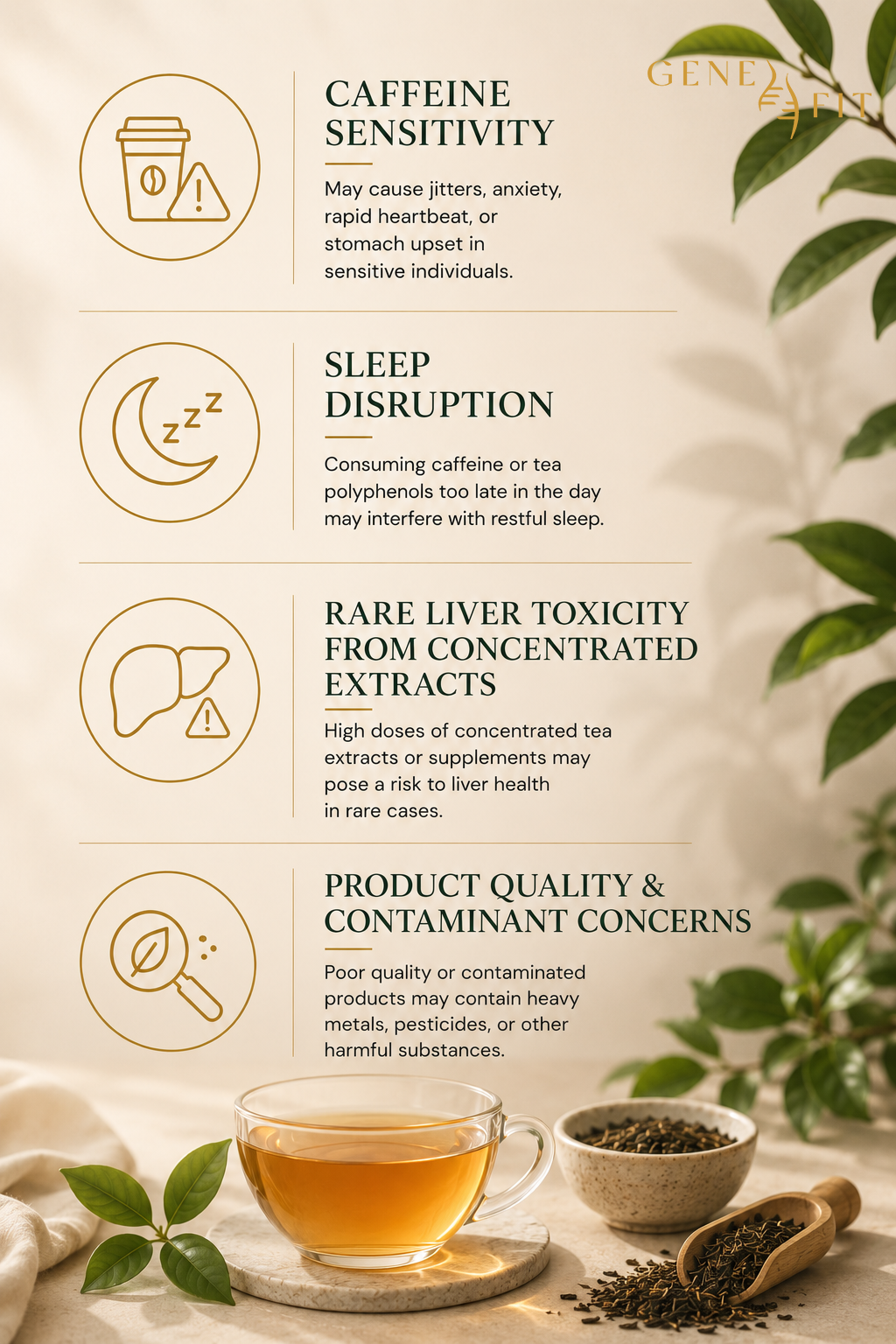
In addition, very high consumption of concentrated tea extracts has occasionally been linked to liver toxicity.
The authors further emphasize the importance of product quality. Environmental contaminants, processing methods, and agricultural practices can influence the safety profile of tea products. Consumers are therefore encouraged to choose reputable sources and avoid excessive use of highly concentrated supplements.
A Balanced Perspective
Overall, the review presents tea as a beverage with substantial scientific support for health promotion, while acknowledging that benefits depend on factors such as dose, individual sensitivity, and product quality. The authors conclude that moderate tea consumption can be incorporated into a healthy dietary pattern and may contribute to long-term disease prevention and healthy aging.
Why This Matters for GeneFit Readers
Tea represents an interesting example of how nutrition, genetics, and lifestyle interact to influence health outcomes. Individuals can respond differently to caffeine, polyphenols, and other tea components depending on their genetic makeup. Variations in genes involved in caffeine metabolism, inflammation, and antioxidant pathways may partly explain why some people experience greater benefits or adverse effects than others.
For GeneFit readers, this highlights the growing importance of personalised nutrition. Rather than relying on one-size-fits-all recommendations, future health strategies may use genetic information to determine who benefits most from specific dietary habits, including tea consumption.
Reference
Yang, M., Zhou, L., Kan, Z., Fu, Z., Zhang, X., & Yang, C. S. (2025). Beneficial health effects and possible health concerns of tea consumption: A review. Beverage Plant Research, 5, e035. https://doi.org/10.48130/bpr-0025-0036
Disclaimer: The information on this website is for educational purposes only and does not constitute medical advice, diagnosis, or treatment. Content is based on publicly available scientific sources and does not replace consultation with a DHA-licensed healthcare professional. No claims are made that this information can prevent, diagnose, or cure any disease. Individual results may vary. GeneFit Clinics assumes no responsibility for any consequences arising from the use of this information.

Ready to unlock your potential?
Your body deserves better than guesswork.
Book a consultation to discover a personalised transformation experience, built on your unique biology and delivered with concierge-level care.